A friend of mine once said, “I lost almost everything, and now I’ve got nothing.” Another friend replied, “We could make something out of that.”
I’ve been thinking about those words ever since.
Let me tell you a story about stories and the power they have to shape our lives.
Whenever we start thinking we have nothing, we’ve stepped through a blind spot and into a trap. The blind spot is real. The trap is an illusion, wrapped in a lie. But we don’t see that. Instead of freeing ourselves and moving along, we stand there dazed, wondering what happened. Then we start making up stories.
“It’s my own fault,” we say. “I should have seen it coming.”
Our own words make the trap seem real. The stories we tell strengthen the lie.
This is not a parable. It happens.
I once heard a friend say, “I have nothing because I am nothing.”
I was staggered by the number of illusions packed into that remark. But the story he had been telling himself had become so deeply embedded that it had become his truth. It took a new story to untangle him from that.
This same friend is now a believer in abundance. When I ask him how that happened, he says, “Do you know that story about the loaves and fishes?”
I tell him that I do.
“Well, that’s my story now.”
I encourage him to say more.
“Do you know what God’s favorite building material is?” he asks.
I tell him that I don’t.
“God’s favorite building material is nothing. He loves to make something out of that.”
I’m not sure what to say.
“So you’re a believer now?” I ask.
He smiles and says, “All I know is that ever since I started living in that story, I’ve come to see myself as someone who’s been given a basket full of good stuff to pass around. There’s always more than enough. I give that away. Then more comes.”
I was thinking about that story today.
There are five thousand people gathered. The disciples are worried.
“How are we going to feed them?” they ask.
Jesus says, “What have you got there?”
They shrug.
“Five loaves and two fish.”
What they mean is, “We’ve got nothing.”
They’re about to tell themselves a story about that nothing when Jesus says, “I’ll take care of that.”
Then he changes the whole story.
All at once, there’s not only enough for everyone. There’s extra.
The miracle is not that the disciples learned to think positively. The miracle is that God took what seemed like nothing and made it enough.
Yes, it’s a miracle, and you can believe what you want about that. But for the moment, focus on my friend. By trading the story of nothingness he had created for himself for this story of abundance, his life began to change. Well, it wasn’t quite that simple, but at the very least, that new story became a tool that helped set him free.
He now lives in a story about abundance and works in the business of giving. He doesn’t just give material goods to those in need. He helps people create new stories to live in.
He gave me this story, and now I’ll give you mine.
A year ago, I could have told you a very different story about myself.
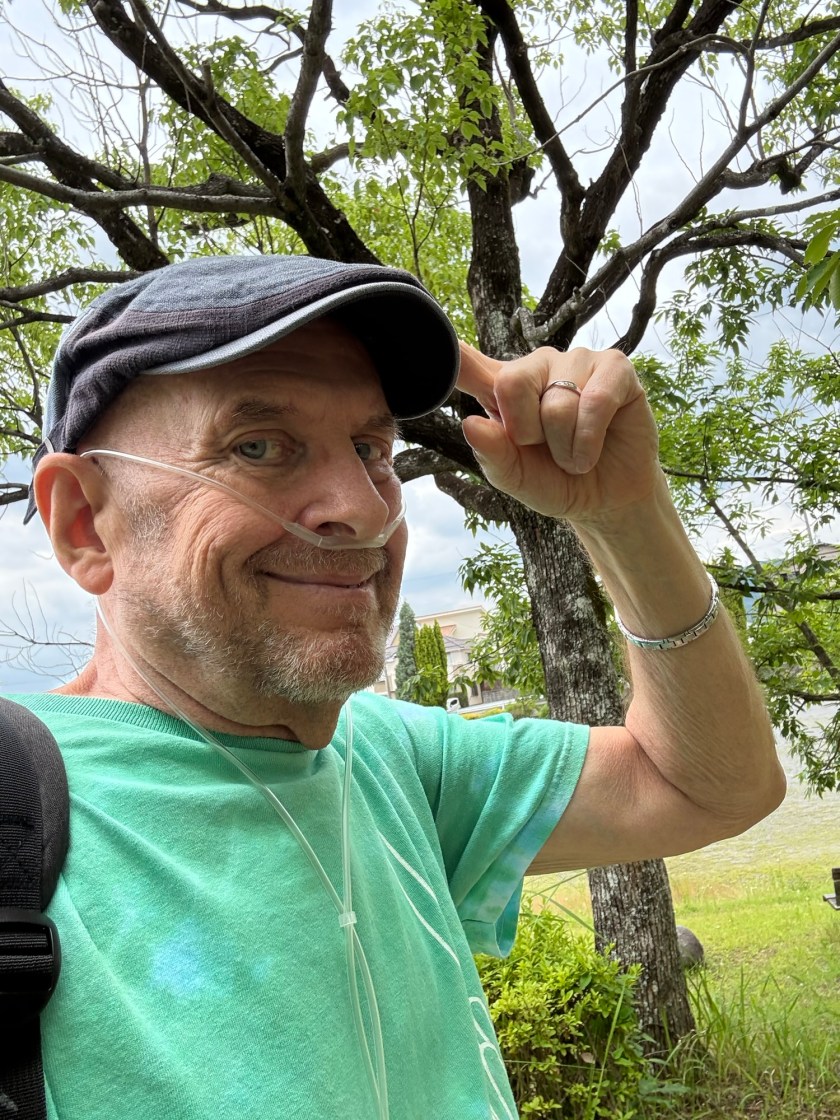
COVID had left me almost completely disabled.
I was on oxygen around the clock. I needed help with many ordinary tasks. Stairs made me anxious. Walking any real distance felt impossible.
It would have been easy to tell myself a story about decline. A story about limitation. A story about what I could no longer do.
The facts were real.
But they weren’t the whole story.
I told my son that I didn’t know what to do next. Before this happened, I was doing thirty minutes on the treadmill. Now I couldn’t even do three.
My son asked, “Can you do one minute?”
It turned out I could.
“Do it again tomorrow,” he said. “Then add another minute.”
So I did.
And I kept going.
At some point, I began believing there might be another story available to me.
I started exercising in other ways. I walked back and forth in the garden. I climbed a couple of stairs and came back down. Little by little, I made progress.
Then I found a teacher.
I began working with David Junga of Junga Health. He teaches in a way that makes you believe anything is possible. When it gets hard he laughs and says, “That’s the weakness coming out.” Then he gives me a strategy to help me recover from the last exercise. Finally, we do one that really pushes me. He cheers when I land it.
Like all great teachers, David leaves me feeling like I accomplished something amazing and am successful. He designs a program of exercises just for me. It evolves every week.
As it evolves, I do, too. Everything is changing for the better.
Today I’m still mostly on oxygen, but I need less of it. More importantly, I no longer think of oxygen as a sign of defeat. I think of it as a tool that allows me to do more.
I’m taking walks on my own.
I’m walking up hills.
I’m climbing stairs.
I’m helping with household chores.
I’m showering with ease and enjoying it again.
I’m stronger than I’ve been in years.
My oxygen needs are decreasing.
Outside our training sessions, I exercise about an hour a day. From morning until night, I’m active, engaged, and doing things I once thought I might never do again.
A year ago I needed help doing almost everything.
Three months ago I couldn’t climb a flight of stairs without anxiety.
Today I can walk a mile and head into the city for lunch.
I say all of this humbly.
Tomorrow I could have a flare up. Tomorrow I could get sick. None of us knows what tomorrow will bring.
But today, I’m living with joy.
And please don’t tell me I’m inspirational.
That’s not the point.
The point is that I stopped looking at my loaves and fishes and calling them nothing.
The point is that I stopped defining myself by what I had lost.
The point is that I started placing what I did have into God’s hands and then doing the work in front of me.
The miracle is not that I became someone else.
The miracle is that God helped me discover there was more in the basket than I thought.
In fact, it turns out there’s extra.
That’s why I’m sharing some of it with you.
And perhaps that’s what the story of the loaves and fishes is inviting us to see.
Not that we need more.
Not that we need to become someone else.
Not that we need to pretend our struggles aren’t real.
But that God can take whatever we place in his hands, however small it seems, and do more with it than we can imagine.
Whatever loaves and fishes you’ve got, however small they seem, don’t dismiss them. Don’t call them nothing. Remember, nothing is God’s favorite building material.
Take the next step.
Then take another.
Keep going until you’ve got a new story to tell yourself. A story about change, growth, resilience, and the unfolding of grace.
Step into that.
May you discover there is more than enough.
#Luke 9:10-17